Teatro Comunale Salvatore Cicero
- Heart, Hear Art!
- 31 sie 2025
- 9 minut(y) czytania

Zaktualizowano: 30 wrz 2025
The english version is below.
Założę się, że słysząc frazę teatr na Sycylii, w pierwszej kolejności myślicie o znajdującym się w Palermo Teatrze Massimo.
I wcale się temu nie dziwię – to monumentalna, zachwycająca budowla o bogatej historii, która w dodatku pojawiła się w jednym z najbardziej kultowych filmów wszech czasów, czyli „Ojcu chrzestnym”.
Warto natomiast pamiętać, że nie jest to jedyny teatr na wyspie!
Planuję oczywiście stworzyć dla was post na temat zapierającego dech w piersiach Teatro Massimo moze moze oraz innych instytucji znajdujących się w stolicy, jednak dziś zamierzam przedstawić wam Teatro Comunale Salvatore Cicero!
Nie wiedząc, gdzie dokładnie jest, trudno na niego właściwie trafić. Teatro Comunale Salvatore Cicero znajduje się bowiem na jednej z odchodzących od głównej uliczek w przepięknym Cefalu.
Samo miasteczko jest dla mnie również bardzo ważne, ponieważ to właśnie w jego okolicach mieszkałam podczas moich wakacji. Niewielka, bo jedynie dwukilometrowa odległość, sprawiała, że w Cefalu byłam codziennie (niekiedy nawet rano oraz wieczorem) i odkrywałam w nim coraz to nowe zakamarki.
Wróćmy jednak do teatru.
Na polskich stronach internetowych nie znalazłam dosłownie żadnych informacji na jego temat. Angielskich postów również nie było zbyt wiele… Postanowiłam więc zaryzykować i zaufać tłumaczowi online, który, jak zapewne wszyscy wiemy, nie zawsze oferuje nam bezbłędny przekład…
Tworzyłam ten wpis z dużą uwagą i na tyle, na ile było to możliwe, sprawdzałam wiarygodność poszczególnych faktów. Mam więc nadzieję, że koniec końców udało mi się pozyskać rzetelne informacje.
*edytowane: Post został sprawdzony, dlatego teraz mam pewność, że wszystkie jego fragmenty są zgodne z prawdą. Niezwykle doceniam tę pomoc i ponownie, dla odmiany jeszcze z tego miejsca, za nią dziękuję!*
No dobrze, a teraz już naprawdę przejdźmy do sedna.
Historia Teatro Comunale Salvatore Cicero rozpoczyna się w 1814 roku, kiedy to z inicjatywy bogatych obywateli rozpoczęto jego budowę. Zwrócili się oni do władz miasta z prośbą o udostępnieniu im gruntu do budowy teatru. Otrzymali działkę, więc plany rzeczywiście mogły zacząć być wdrażane. Teatr został zaprojektowany przez człowieka o imieniu Antonio Caruso, a jego budowa trwała dwa lata. Później na wygląd budynku miał wpływ również Emanuele Labisio, który dodał chociażby skromną galerię dla uboższych widzów.
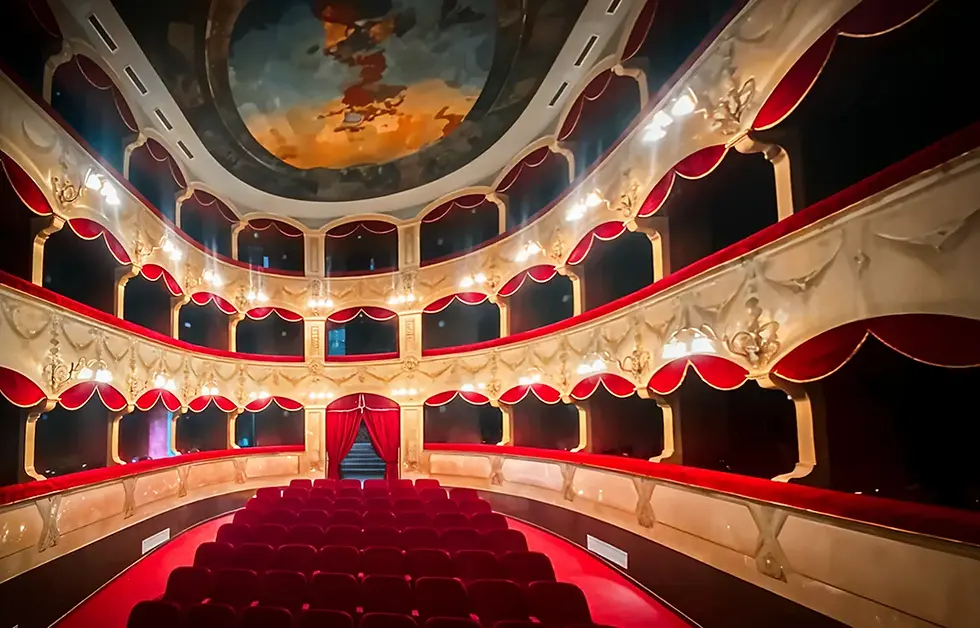
Za zdobienia teatru jest z kolei odpowiedzialny Rosario Spagnolo, który stworzył między innymi zachwycające malowidło na suficie, przedstawiające alegorię sztuki.
W dwudziestym wieku teatr przekształcono w kino. Podczas drugiej wojny światowej budynek stał się jednak siedzibą wojsk niemieckich. W latach pięćdziesiątych próbowano dostosować teatr do wymogów ówczesnej kinematografii, jednak napotkano problemy, które okazały się o wiele trudniejsze do rozwiązania, niż można by się spodziewać…
W latach 1975-1982 przeprowadzono gruntowną renowację. Swoją drogą, to nie jedyny sycylijski teatr, w którego historii pojawia się tak długa przerwa ;)
Po siedmiu latach budynek znów był jednak gotowy do pełnienia swojej pierwotnej funkcji i został na nowo otwarty.
Teatr nie należy do największych, właściwie jest dość skromny. Sala ze sceną jawi nam się już w chwili, gdy stoimy w progu budynku, ponieważ znajduje się ona dokładnie na wprost.
Rozmiar teatru nie jest może szczególnie duży, ale jego wygląd naprawdę imponuje.
A teraz czas na ciekawostkę i przy okazji nieco moich prywatnych wyburzeń ;)
Zapewne kojarzycie przepiękny, nagrodzony oscarem film Cinema Paradiso w reżyserii Giuseppe Tornatore. Ale czy wiedzieliście, że był on nagrywany właśnie we wspomnianym wyżej miasteczku, Cefalu, oraz w samym Teatro Comunale Salvatore Cicero?
Cinema Paradiso to jeden z najwspanialszych filmów, jakie widziałam. Na mój zachwyt podczas jego oglądania, miał zapewne duży wpływ fakt, iż pierwszy raz zobaczyłam go w chwili, kiedy moja fascynacja kinem była największa.
Był taki czas w moim życiu, gdy oglądałam po kilka filmów dziennie i chodziłam do kina za każdym razem, kiedy na ekrany wchodził jakiś nowy tytuł.
Widywałam wtedy dużo bardzo dobrych produkcji, ale to filmy o miłości do filmów odbierałam w szczególny sposób i reagowałam na nie wyjątkowo intensywnymi emocjami.
Cinema Paradiso to produkcja opowiadająca o pasji, przyjaźni, dorastaniu i właśnie niezwykle silnych uczuciach żywionych wobec kina.
Bardzo ważną rolę odgrywa tu jednak również włoska społeczność małego miasteczka. W Cinema Paradiso widać realia egzystencji zamieszkujących go ludzi wraz z jej blaskami, ale też cieniami.
Tak, jak mocno splata się więc w Teatro Comunale Salvatore Cicero sztuka filmowa oraz teatralna, tak samo ją łączę w sobie te dwie miłości.
Obecnie częściej odwiedzam teatr i mocniej się nim interesuję, ale jak już wcześniej pisałam, był czas, kiedy to filmy kochałam najmocniej. Wiem, że gdyby nie etap mojej fascynacji kinem, dziś zapewne nie byłoby mnie tu, gdzie jestem, czyli w moim mieszkaniu w Krakowie, w oczekiwaniu na rozpoczęcie się roku akademickiego, w którym to zacznę studiować drugi kierunek, jakim jest wiedza o teatrze.
Pisząc o tych dwóch pięknych dziedzinach sztuki, o dwóch muzach, poczułam aż potrzebę zamieszczenia tu fragmentu wiersza Pod jedną gwiazdą Szymborskiej. Przepraszam dawną miłość, że nową uważam za pierwszą, chciałabym powiedzieć kinu.
A teraz pozwólcie, że opowiem wam nieco o pewnym człowieku imieniem Salvatore Cicera, na którego cześć został nazwany opisywany dziś przeze mnie teatr.
Salvatore Cicera był mistrzem skrzypiec z wielokrotnie wspominanego już tutaj Cefalu.
Nie wiem, na ile można temu wierzyć, natomiast mówiło się, że zanim nauczył się czytać książki, rozumiał nuty.
Jako chłopiec uczęszczał do zwykłej szkoły podstawowej, ale także do konserwatorium muzycznego. To wlaśnie dlatego przez trzy dni w tygodniu chodził do pierwszej placówki, a kolejne trzy do drugiej.
Salvatore Cicera był powszechnie uznawany za bardzo utalentowane dziecko, co nie zmieniło się wraz z upływem czasu.
Później, w wieku dwudziestu pięciu lat, został bowiem pierwszym skrzypkiem orkiestry.
Podróżował także po Europie i odnosił liczne sukcesy, jednak wydaje się, że jego serce od początku należało do Sycylii, ponieważ to właśnie tam postanowił się na stałę osiedlić.
Salvatore Cicera zmarł przedwcześnie 3 sierpnia 1982 roku, co było ogromną stratą dla wszystkich mieszkańców Cefalu i miłośników muzyki.
25 listopada teatr przy Via Spinuzza otrzymał oficjalne imię wielkiego skrzypka.
Mam wrażenie, iż o Teatro Comunale Salvatore Cicero mówi się definitywnie za mało. Potwierdza to również coś, o czym pisałam w jednym z moich ostatnich postów - Cefalu jest miejscem, w którym warto spędzić cały dzień, błądząc i odkrywając kolejne sekretne punkty. Teraz będziecie już wiedzieć o Teatrze imienia Salvatore Cicero, ale założę się, że to niezwykłe miasteczko skrywa jeszcze wiele punktów, które zaskoczą i Was, i mnie! Nie bójcie się więc zapomnieć o upływającym czasie i zagubić tutaj! Gwarantuję, że nie pożałujecie!
I bet that when you hear the phrase theatre in Sicily, you first think of Teatro Massimo in Palermo.
And I'm not surprised – it's a monumental, stunning building with a rich history, which, moreover, appeared in one of the most iconic films of all time - The Godfather.
It's worth remembering however, that it is not the only theatre on the island!
Of course, I plan to write a post about the breathtaking Teatro Massimo and other artistic institutions located in the capital of Sicily soon, but today I would like to tell you a little bit about Teatro Comunale Salvatore Cicero!
Without knowing its exact location, it's quite difficult to find it. Teatro Comunale Salvatore Cicero was built on one of the streets, Via Spinuzza, to be precise, branching off the main one in beautiful Cefalù.
The town itself is also very important to me, due to the fact that I stayed really close to it during my holidays. The short distance from hotel, just two kilometers, was why I visited Cefalù every day (sometimes even twice a day) and kept on discovering new, more and less visible and obvious spots ;)
But let's get back to the theater.
I found literally no information about it on Polish websites. There also weren't many posts in English… That's why I decided to take a risk and trust the online translator, which, as we all know, doesn't always give us completely flawless translations…
While creating this post I was trying to make sure each fact is true... I really hope I managed to get reliable information!
*edited: The post got verified, so now I am sure that everything is alright with it. I truly appreciate the help that I got and once again, also there, I thank for it so so much!*
Okay, but now let's really get to the point.
The history of Teatro Comunale Salvatore Cicero begins in 1814, when, at the initiative of wealthy citizens, its construction began. But before it happened, they had to talk with the municipality about the land on which the theatre could have been built. Thankfully, they received the plot, so the plans could actually become reality. The theater was designed by Antonio Caruso. Its building took two years. However it's also worth remembering, that later Emanuele Labisio influenced the building's appearance too. He added a small gallery for the poorer spectators for example.
Rosario Spagnolo, on the other hand, is responsible for the theatre's decorations. It was him who created a stunning painting on the ceiling with an allegory of art.
In the 20th century, the theatre was converted into a cinema. During World War II, however, the building became headquarters for German troops. Then, in the 1950s, attempts were made to make the theater fulfil the conditions of contemporary cinematography, but there appeared some problems that turned out to be more difficult to solve than one could expect…
A huge renovation took place between 1975 and 1982. By the way, this is not the only Sicilian theater in which history there is such a big gap ;)
After seven years, however, the building was again ready to fill its original role and got reopened.
The theatre isn't large, in fact, it's quite modest. We can see the auditorium and the stage the moment we stand at the threshold of the building, because it is located close and directly in front of us.
The theatre may not be big, but its appearance is truly impressive!
Now it's time for a little break and bit of my personal thoughts and curiosities ;)
You probably remember the beautiful, Oscar-winning movie Cinema Paradiso, directed by Giuseppe Tornatore. But did you know that it was filmed in the town I have already told you about, Cefalù, and at the Teatro Comunale Salvatore Cicero itself?
Cinema Paradiso is one of the most wonderful films I've ever seen. My delight during watching it was probably caused by the fact that I first saw it when my fascination with cinema was at its peak.
There was a time in my life when I watched several movies a day and went to the cinema whenever a new one was released.
I saw many great productions then but I found films about the love for movies particularly enchanting and reacted to them with really intense emotions.
Cinema Paradiso is a production about passion, friendship, growing up, and the incredibly strong feelings that one can have for cinema. It sounds familiar, doesn't it?
However, the Italian community of a small town also plays a very important role here. In Cinema Paradiso, we can see the real life of the people living here, with its highlights but also shadows.
Just like the cinematography and theatrical art connect at Teatro Comunale Salvatore Cicero, I feel like they also do in my heart.
I now visit the theatre more often and have a stronger interest in it, but as I've written before, there was a time when I loved films the most. I know that if it weren't for my fascination with the cinema, I probably wouldn't be where I am today - in my flat in Cracow, waiting for the start of the new academic year, in which I will begin the second field of study, theatrology
While writing about these two beautiful arts, these two muses, I felt a strong need to add here an excerpt from Szymborska's poem Under One Star: I apologize to my old love for considering my new one as my first, I would like to say to the cinema.
Now, let me tell you a little bit about the name of the Teatro Comunale Salvatore Cicero.
In 1982, the theater was named after Salvatore Cicera. You're probably wondering why...
Salvatore Cicera was a violinist master from already mentioned here many times Cefalu.
It is said, that before learning how to read, he understood the musical notes.
As a boy, he attended a regular elementary school but also the conservatory. That's why three days a week he would go to the first one, and other three to the second.
Salvatore Cicera was considered a very talented child.
Then, at the age of twenty five, he became the first violin of the orchestra.
He went around Europe and achieved many successes, however it seems like his heart belong to Sicily, because that's where he decided to settle down.
Salvatore Cicera died prematurely on the 3rd August 1982, which was a huge loss for all of the Cefalu's inhabitants and lovers of music.
On the 25th of November, in the evening, the theatre on the Via Spinuzza was officialy named after the great violinist.
I feel like people don't talk and write enough about Teatro Comunale Salvatore Cicero. This also shows something I told you recently in one of my posts – Cefalu is a place worth spending a whole day in, wandering around and discovering its secret spots. Now you'll know about the Teatro Salvatore Cicero, but I bet this amazing town still has got many hidden gems that will surprise both you and me! So don't be afraid to lose track of time and get lost here! I guarantee you won't regret it!


Komentarze